Gand Mool Nakshatra Shanti Puja
Traditional Vedic 27th-day ceremonial rites for infants born under Moola, Ashlesha, Jyeshtha, Revati, Ashwini, or Magha nakshatras using 27 sacred tree leaves and holy water.
5 Step-by-Step Ceremonial Photos: Gand Mool Nakshatra Shanti Puja
Authentic visual moments from traditional ceremonies officiated across Bengaluru, showcasing sacred mandalas, havan vidhi, and concludes with Maha Aarti.
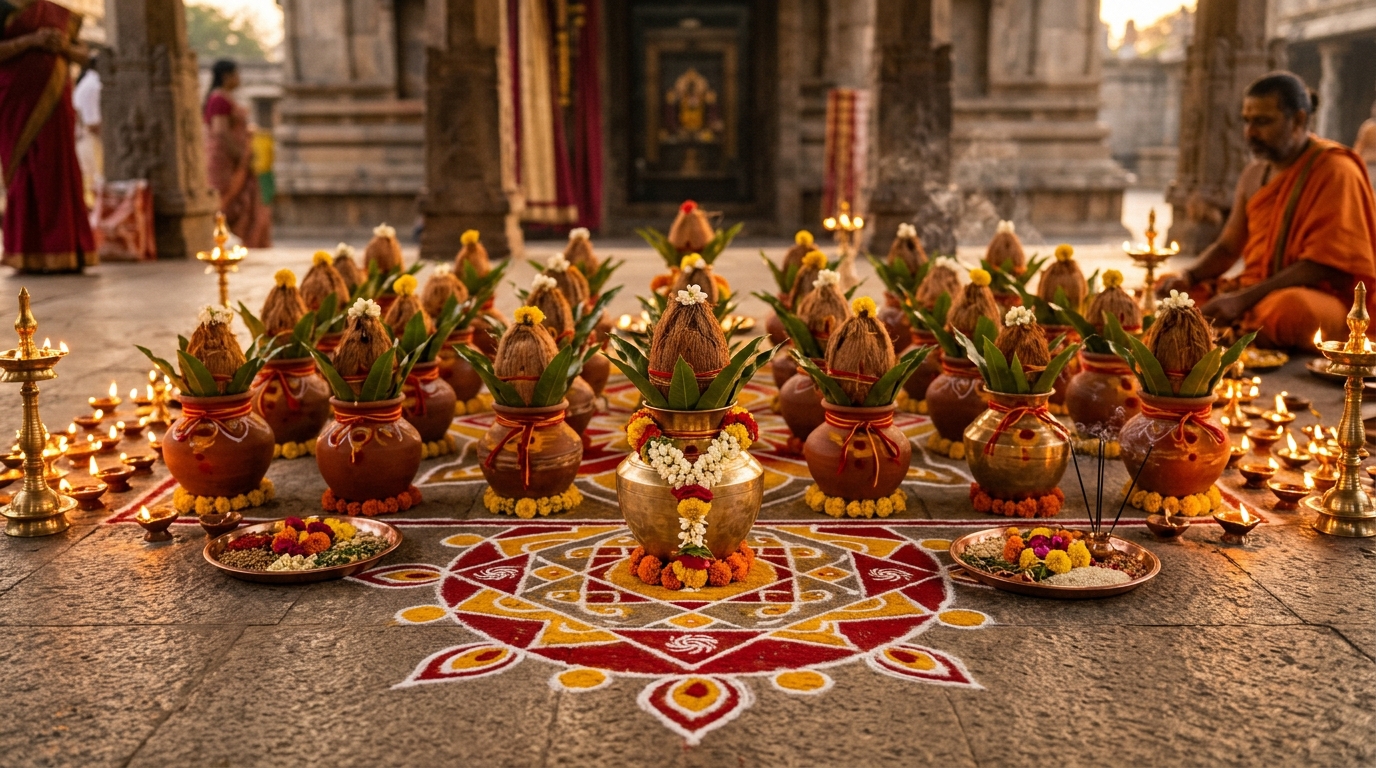
Step 127 Kalash Sthapana
Arrangement of 27 sanctified water kalash pots representing the 27 lunar nakshatras
 Step 2
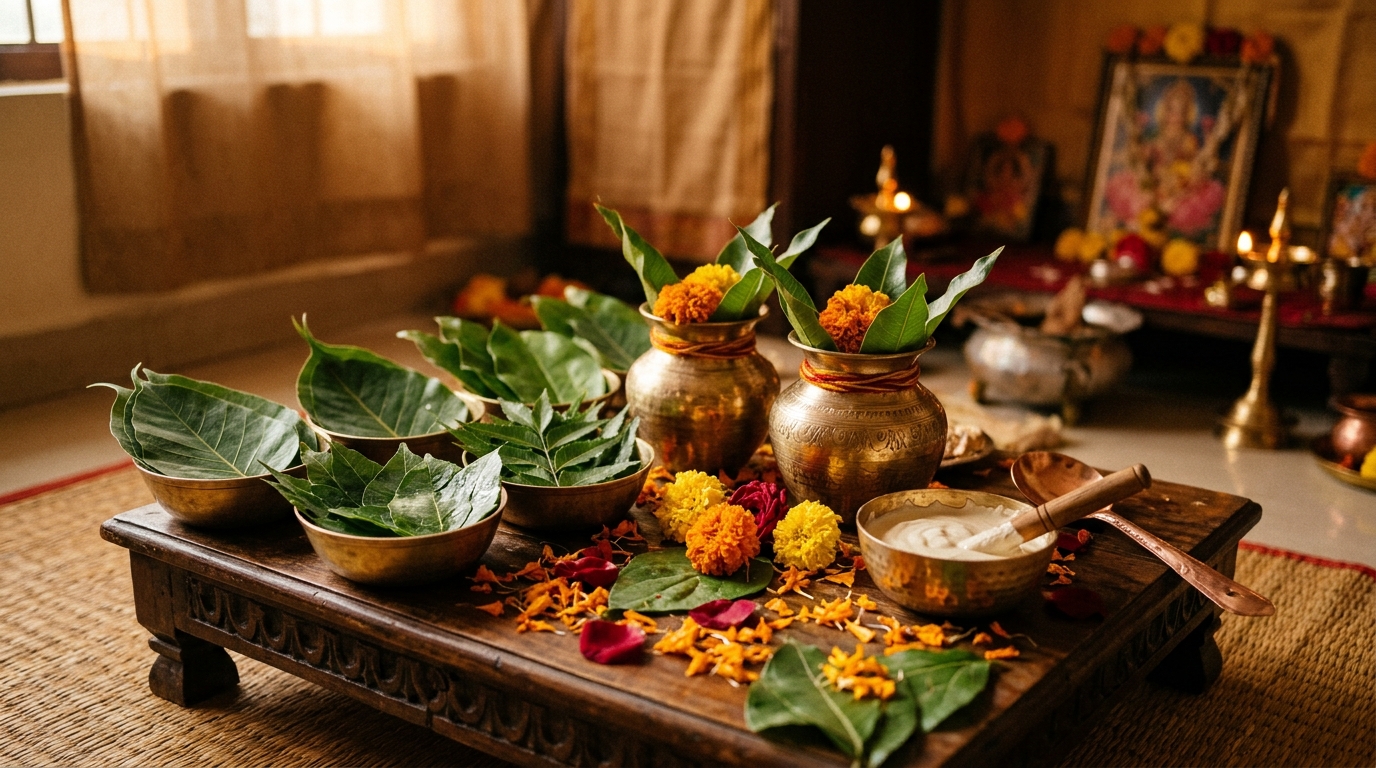
27 Sacred Tree Leaves
Medicinal leaves from 27 sacred trees arranged with holy water from clean sources
 Step 3
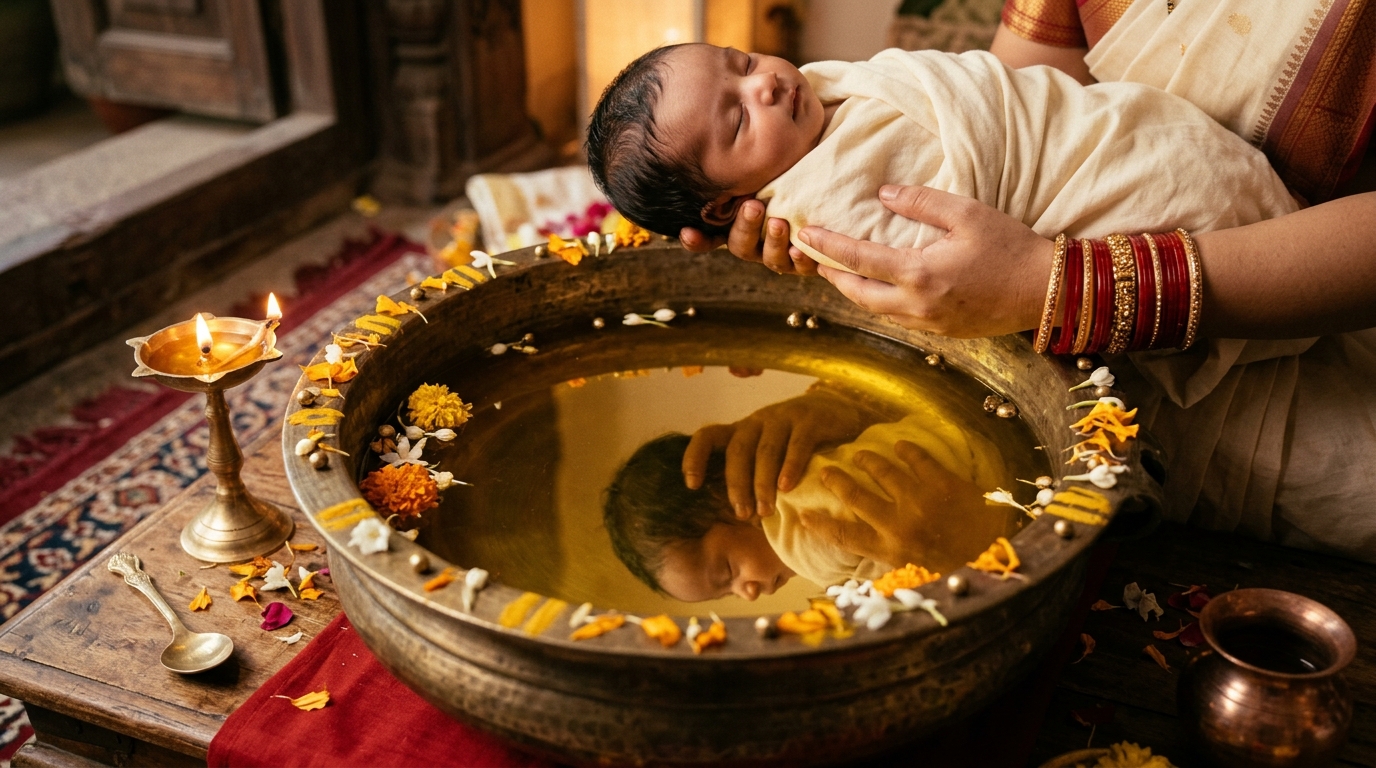
Chhaya Patra Darshan
Traditional father-child ceremonial shadow viewing (Chhaya Patra) in a bowl of pure warm ghee
 Step 4
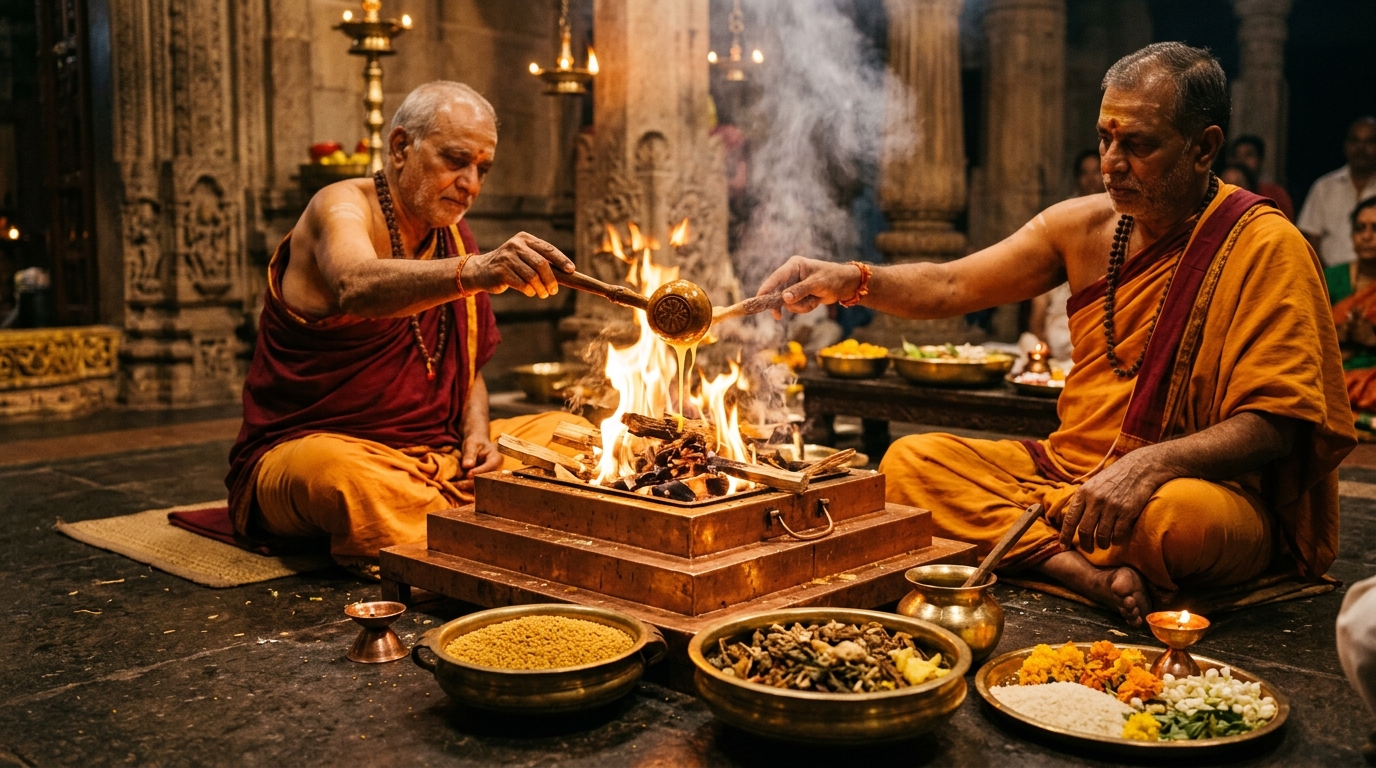
Maha Nakshatra Havan
Offering holy oblations into the sacred fire to harmonize the newborn's birth nakshatra
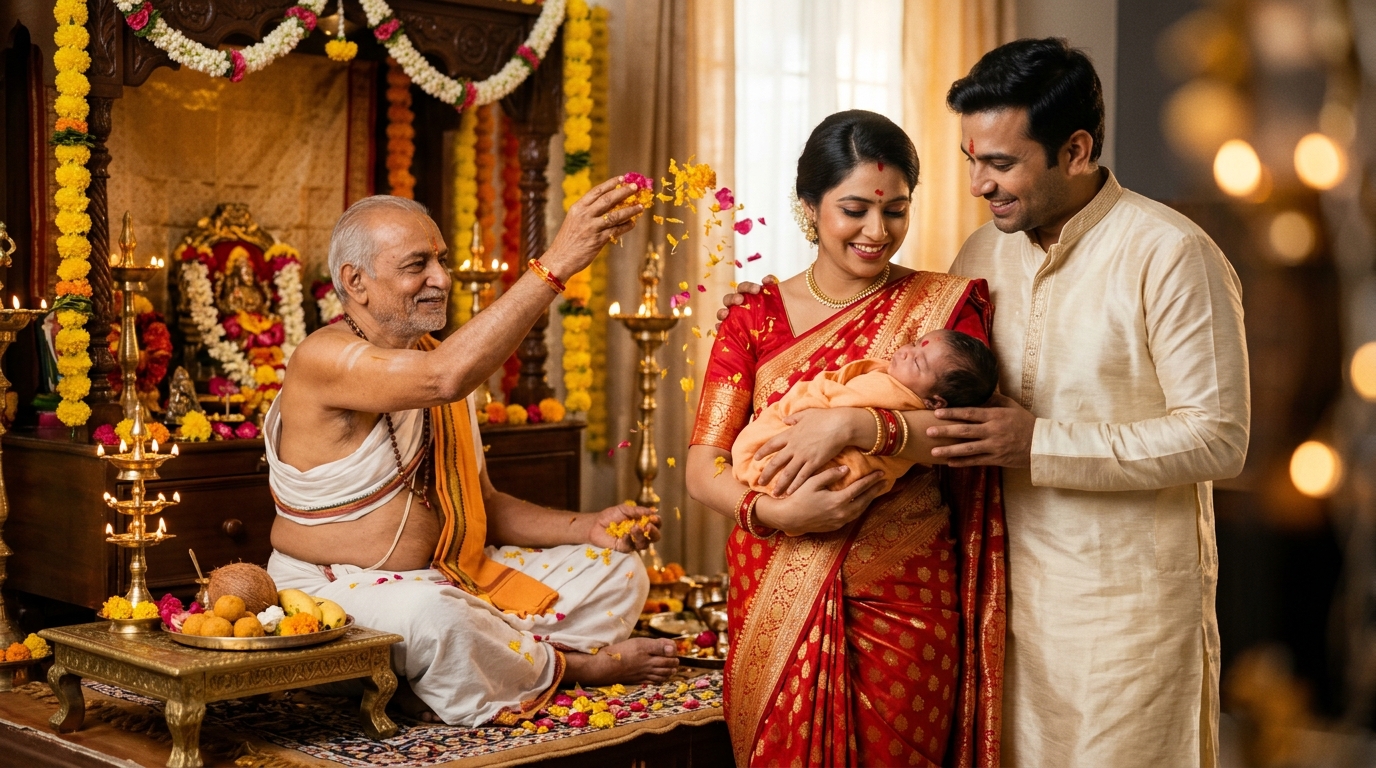 Step 5
Family Ashirwad & Prasad
Parents holding the baby receiving blessings from Pandit Ji for a long, healthy, and happy life
Overview & Traditional Context
In Vedic astrology, six of the twenty-seven lunar constellations (Nakshatras)—namely Ashwini, Ashlesha, Magha, Jyeshtha, Moola, and Revati—occur at the junction points (Gandanta) between water and fire zodiac signs. Newborns arriving under these nakshatras are traditionally honored with a Gand Mool Shanti Puja.
Classically performed on the 27th day following the child's birth (when the moon returns to the exact birth nakshatra), this ritual invokes celestial guardians to bestow longevity, physical well-being, sharp intellect, and emotional tranquility.
Acharya Shiv Kumar Pandey performs this elaborate ritual strictly adhering to the classical Vidhi: gathering waters from clean sources, leaves from 27 sacred trees, soil from seven auspicious locations (Saptamrittika), conducting the Chhaya Patra Darshan, and concluding with a grand Nakshatra Havan.
Cultural & Scriptural Significance
- Brings peace of mind to parents by fulfilling classical Vedic birth milestone customs.
- Promotes the child's physical well-being, healthy growth, and intellectual development.
- Chhaya Patra Darshan (shadow viewing in ghee) symbolizes the removal of initial astrological friction between father and child.
- Concludes with blessings for the entire family's prosperity and long life.
Step-by-Step Shastriya Ritual Vidhi
Sankalpa & Gauri Ganesh Pujan
Parents resolve to seek divine blessings for the newborn's well-being and health.
27 Kalash & Nakshatra Sthapana
Arranging twenty-seven sanctified water pots representing the full lunar zodiac.
27 Sacred Tree Leaves Abhishek
Infusing the waters with medicinal leaves and Saptamrittika soils.
Chhaya Patra Darshan
Father views the child's reflection in pure warm ghee in a bronze bowl before donating it.
Nakshatra Havan with 108 Ahutis
Offering oblations to the specific birth deity with sacred wood and pure cow ghee.
Abhisheka & Family Ashirwad
Sprinkling blessed holy water on parents and baby, followed by Aarti and sweets distribution.
Complete Puja Samagri Checklist
Brought by Pandit Ji (Included)
- •27 Sacred Earthen/Brass Kalash Pots
- •Leaves from 27 Traditional Trees Kit
- •Saptamrittika (7 Auspicious Soils)
- •Bronze Chhaya Patra Bowl & Pure Ghee
- •Copper Havan Kund, Woods & Samagri
- •Gangajal, Kumkum, Haldi, & Chandan
Kept Ready by Homeowner
- •Fresh flowers and 2 garlands
- •Fresh fruits and sweets (Peda/Laddoo)
- •New baby clothes to wear after the puja
- •Brass deepams and cotton wicks
- •Grains and clothes for traditional charity (Daan)
Auspicious Shubh Muhurat in Bangalore
Ideally performed on the 27th day after birth when the moon re-enters the birth nakshatra. If missed, it can be scheduled on any subsequent recurrence of the birth star.
Frequently Asked Questions
Q. What if the 27th day has already passed?
If the 27th day was missed due to hospital discharge or travel, the puja can be conducted on any future date when the birth nakshatra recurs (occurs every 27 days).
Q. Can an adult perform Gand Mool Shanti?
Yes, adults born under Mool nakshatras who never had this ritual performed in infancy can undergo the ceremony to bring inner peace and clarity.
Q. Is the father prohibited from seeing the baby before the puja?
In traditional orthodoxy, the father does not gaze directly at the newborn until Chhaya Patra Darshan is completed; however, in modern times, families observe this symbolically during the ceremony.
Book Gand Mool Nakshatra Shanti Puja
Connect directly with Acharya Shiv Kumar Pandey for Shubh Muhurat & Samagri guidance
Need urgent same-day or early morning ceremony?
Call Pandit Ji directly at +91 63611 59700