Shri Satyanarayan Katha & Puja
Traditional recitation of Shri Satyanarayan Swami Katha with Panchamrit abhishek, sacred havan, and Pancha Adhyaya katha for household happiness and peace of mind.
5 Step-by-Step Ceremonial Photos: Shri Satyanarayan Katha & Puja
Authentic visual moments from traditional ceremonies officiated across Bengaluru, showcasing sacred mandalas, havan vidhi, and concludes with Maha Aarti.
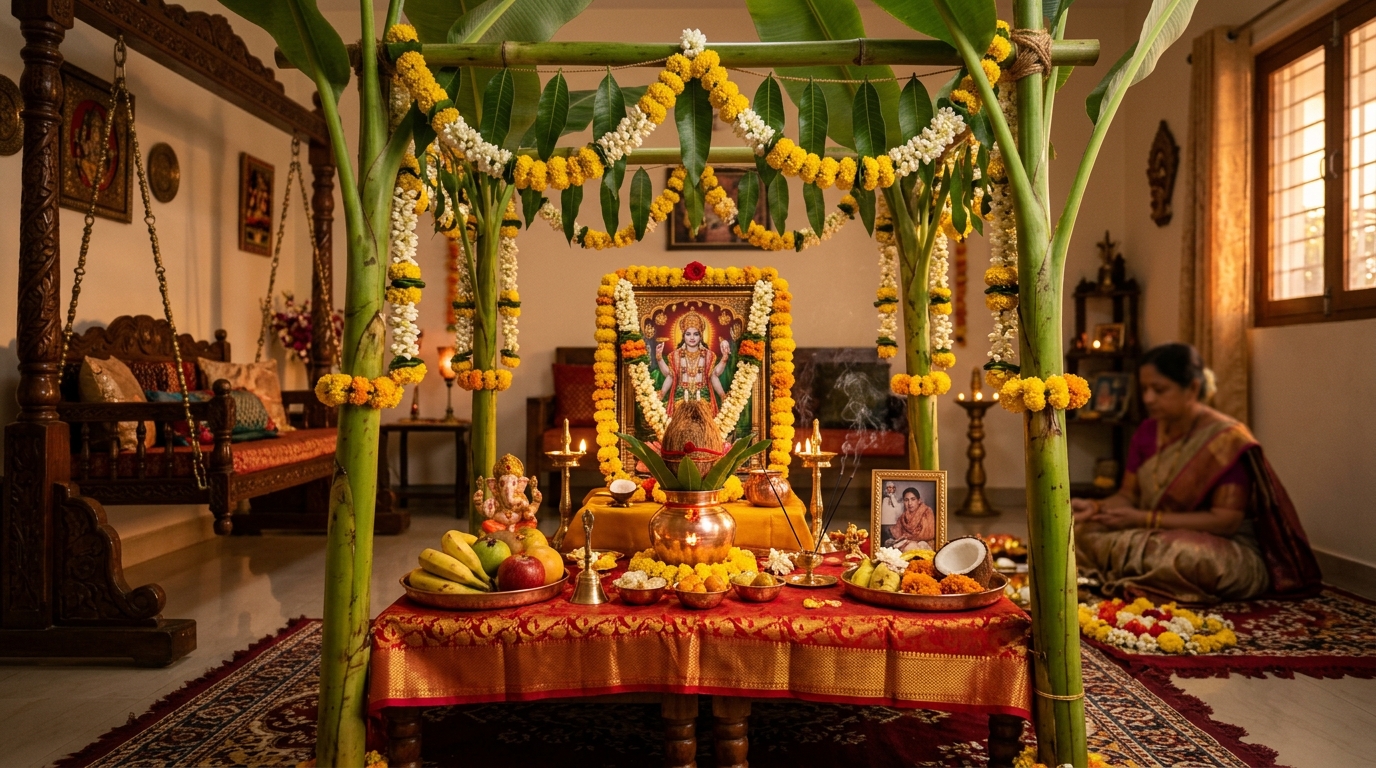
Step 1Traditional Altar Setup
Lord Satyanarayan mandap framed with auspicious banana stems, marigolds, and brass lamps
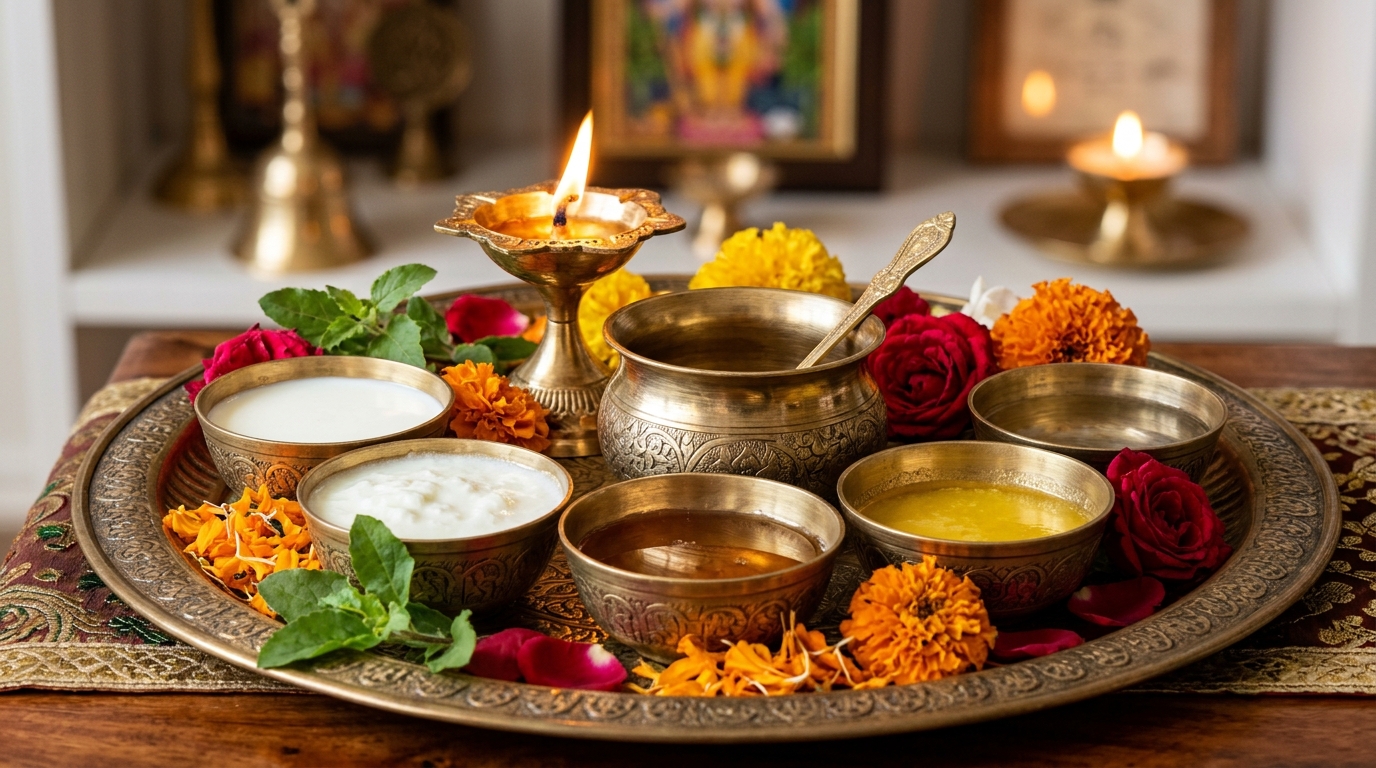 Step 2
Deity Sthapana
Reverent invocation of Lord Vishnu in his Satyanarayan form with sacred Tulsi leaves
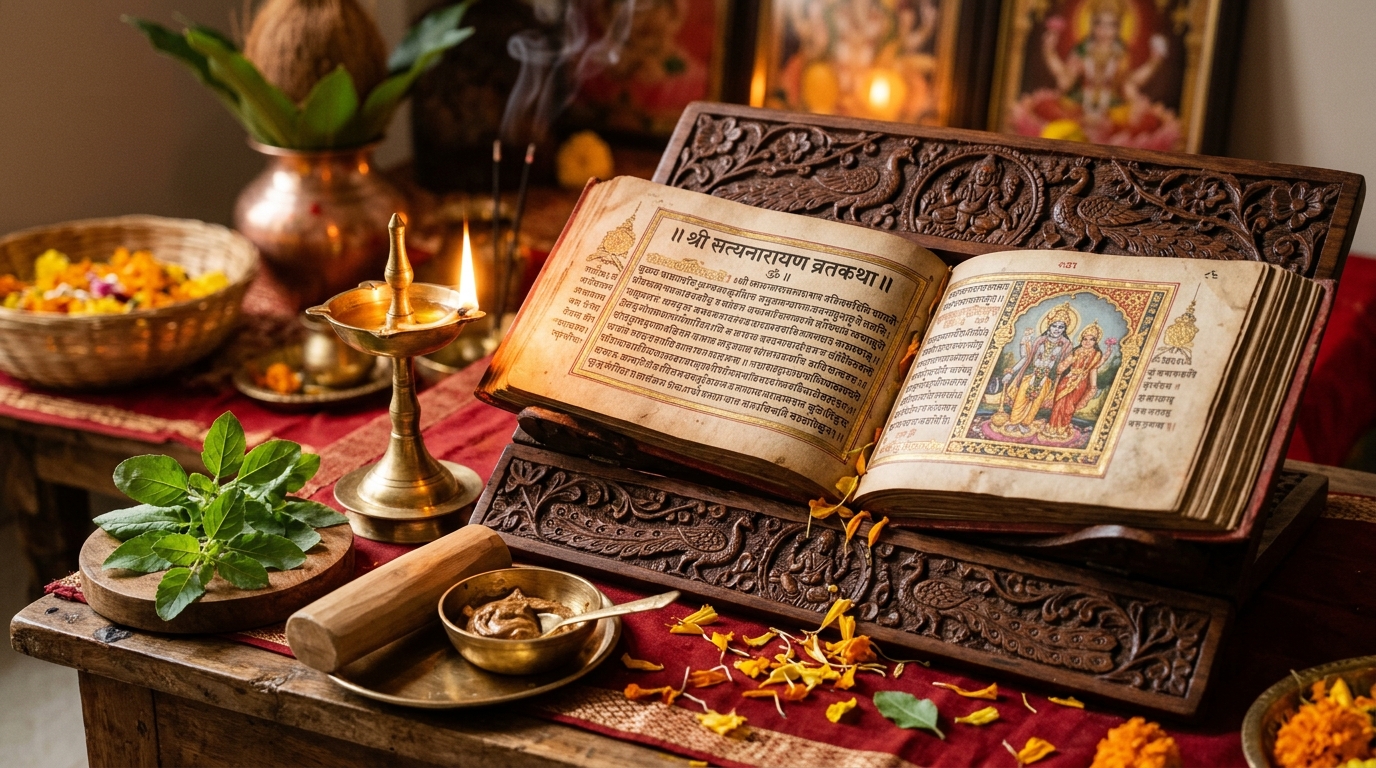 Step 3
Pancha Adhyaya Katha
Devotional recitation of the five scriptural chapters from the Skanda Purana
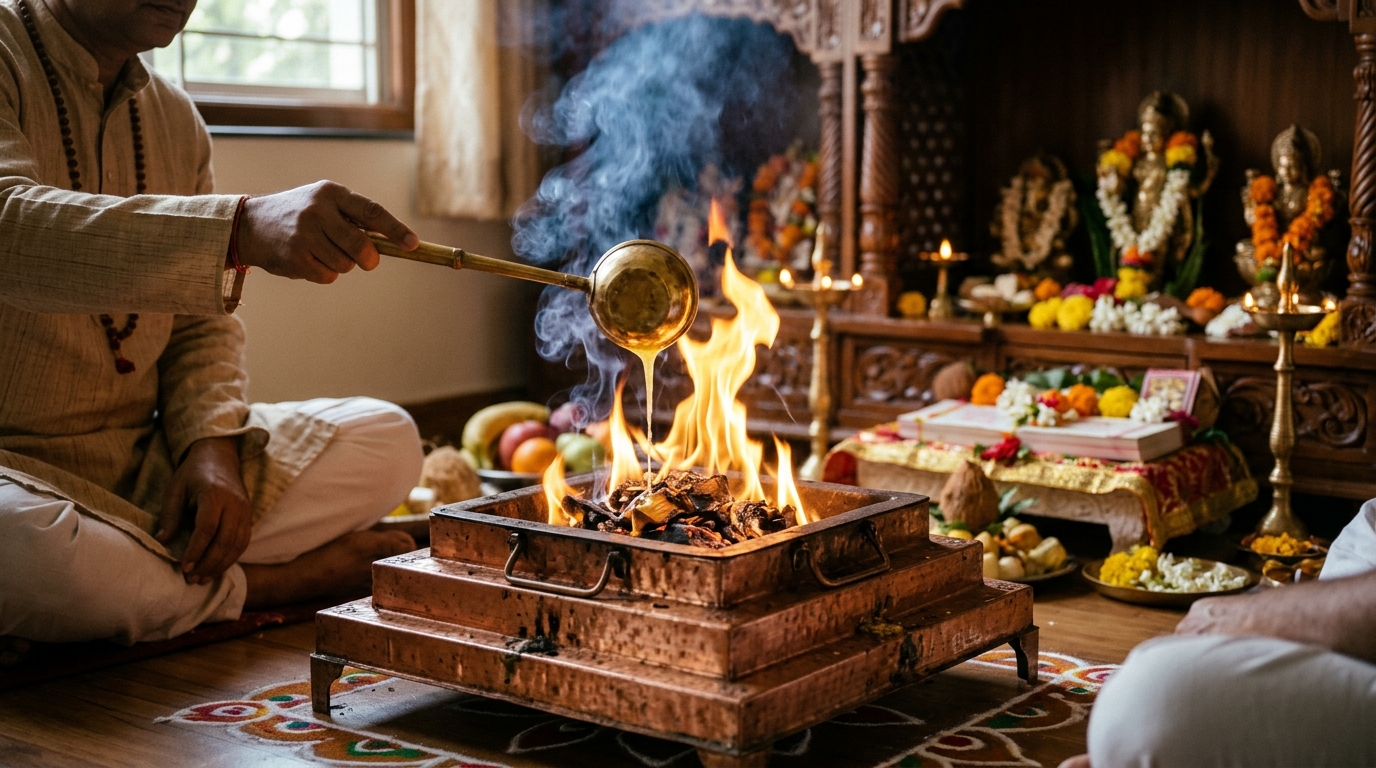 Step 4
Panchamrit & Shuddh Bhog
Preparation of sacred Panchamrit and golden wheat flour Panjiri prasad with banana slices
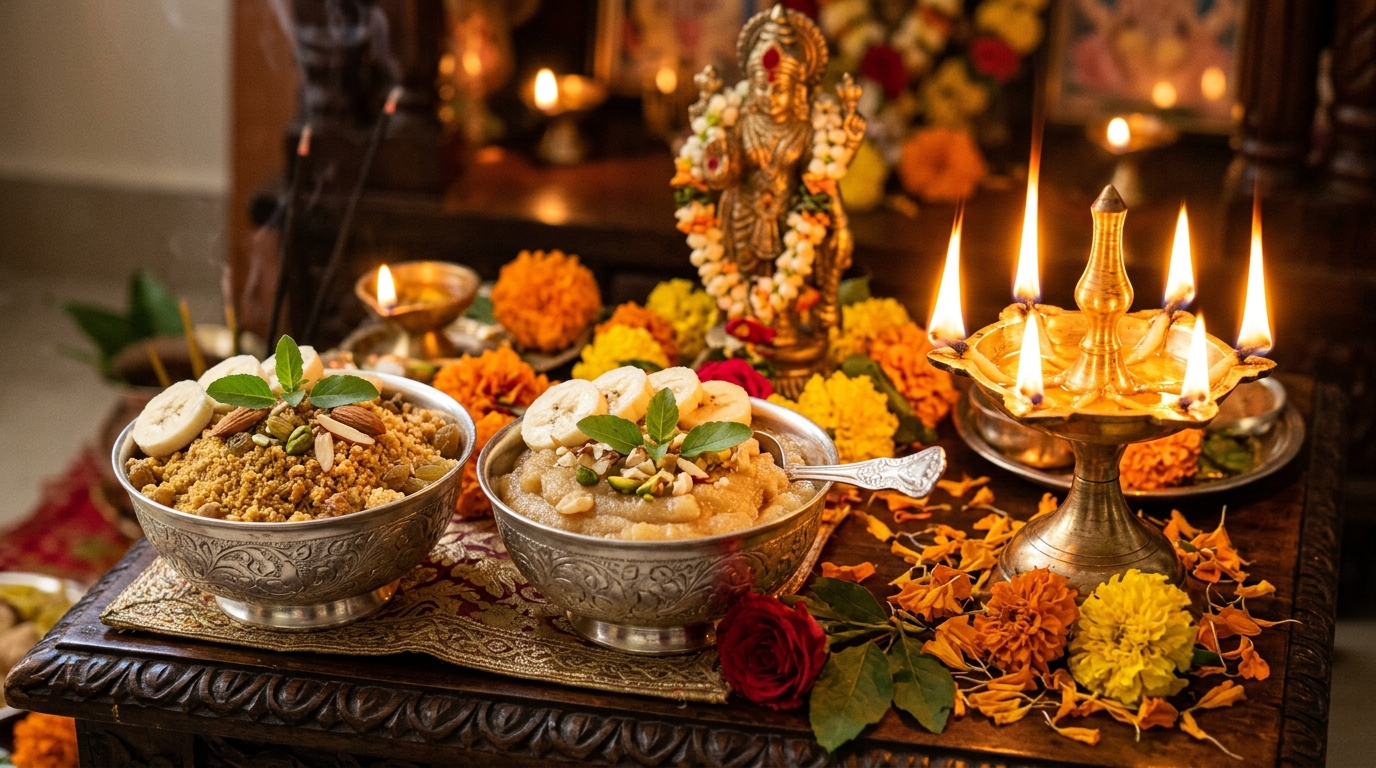 Step 5
Concluding Maha Aarti
Joyous Maha Aarti with glowing camphor deepam, conch shell blowing, and prasad distribution
Overview & Traditional Context
Shri Satyanarayan Puja is one of the most widely revered devotional ceremonies in Sanatan Dharma. Chronicled in the Reva Khanda of the sacred Skanda Purana, this ceremony honors Lord Vishnu as the embodiment of Supreme Truth (Satya).
Bangalore families traditionally perform this puja on Purnima (full moon days), Ekadashi, Sankranti, birthdays, anniversaries, house purchase milestones, or to celebrate career advancements and new beginnings.
Acharya Shiv Kumar Pandey conducts the ceremony with traditional North Indian dignity. The recitation of the five chapters (Pancha Adhyaya) is delivered in pure Sanskrit accompanied by clear, melodious Hindi storytelling so all attendees absorb the moral and cultural virtues of righteousness, honesty, and family unity.
Cultural & Scriptural Significance
- Lord Satyanarayan reminds devotees that adherence to truth (Satya) and selfless devotion leads to inner peace, contentment, and triumph over life's challenges.
- Listening to the sacred katha together reinforces bonds between family members and fosters a calm, serene atmosphere in the home.
- The preparation and sharing of Panjiri / Sheera prasad and Panchamrit signifies purity of intent and community sharing.
- Concluding with traditional havan and Vishnu Sahasranama chanting invites auspiciousness and long-term peace of mind.
Step-by-Step Shastriya Ritual Vidhi
Ganesh & Gauri Pujan
Invoking Lord Ganesha for unhindered completion and Goddess Gauri for family well-being.
Navagraha & Lokpal Sthapana
Arranging planetary deities and directional guardians on sanctified rice mandalas.
Varuna Kalash Pujan
Consecrating the holy water pot with Pancharatna, mango leaves, and coconut.
Satyanarayan Shodashopachara Pujan
Offering 16 traditional devotional services (Asana, Padya, Arghya, Snana, Panchamrit, Vastra, Yajnopavita, Chandan, Pushpa, Dhoopa, Deepa, Naivedya, Tambula, Dakshina, Pradakshina, Namaskara).
Pancha Adhyaya Katha Recitation
Melodious reading of the five chapters from the Skanda Purana with Hindi explanations.
Havan, Aarti & Prasad Vitaran
Offering sacred ahutis into the havan fire, performing the grand Aarti, and sharing blessed bhog.
Complete Puja Samagri Checklist
Brought by Pandit Ji (Included)
- •Copper Havan Kund & Spoon
- •Pure Desi Cow Ghee
- •Shuddh Havan Samagri & Dry Camphor
- •Navadhanya & Akshat Rice
- •Kumkum, Sindoor, Roli & Chandan
- •Gangajal & Sacred Thread (Kalava)
- •Dry Mango Wood (Samidha)
- •Panchamrit Mixing Utensils
Kept Ready by Homeowner
- •Fresh flowers and 2 garlands
- •Fresh banana leaves or stems for mandap
- •Fresh seasonal fruits (5 varieties)
- •Ingredients for Panjiri (Wheat flour, sugar, ghee, dry fruits)
- •Milk, curd, honey, sugar, and ghee for Panchamrit
- •Fresh Tulsi leaves (crucial for Lord Vishnu)
- •Clean betel leaves (Paan) and Supari
- •Brass deepams and cotton wicks
Auspicious Shubh Muhurat in Bangalore
Highly auspicious on Purnima (Full Moon), Sankranti, Ekadashi, or any convenient weekend morning/evening chosen for family milestones.
Frequently Asked Questions
Q. Can Satyanarayan Puja be performed in the evening?
Yes, performing the katha in the late afternoon or evening during Pradosh kaal on Purnima is very traditional and convenient for working families in Bangalore.
Q. Is fasting mandatory for the family?
A simple sattvic fast or consuming fruits until the katha concludes is traditionally observed by the main karta, though not strictly mandatory for elders or children.
Q. Can this puja be combined with housewarming or birthday?
Absolutely. Satyanarayan Katha is frequently conducted alongside Griha Pravesh, birthdays, and anniversary celebrations.
Book Shri Satyanarayan Katha & Puja
Connect directly with Acharya Shiv Kumar Pandey for Shubh Muhurat & Samagri guidance
Need urgent same-day or early morning ceremony?
Call Pandit Ji directly at +91 63611 59700